
Parentage Cases
Daniel Gold • September 23, 2024

A considerable number of matters I have handled in my practice involve unmarried couples who have one or more children together. The situations are diverse; some have lived as intact families for many years. Others are short-term relationships that resulted in a pregnancy. Each situation presents unique challenges.
Navigating child custody can be challenging, especially for unmarried parents. Understanding your legal rights and options is crucial to ensuring the best outcome for your child.
As with married couples
, custody rights for unmarried parents are addressed with the same focus on the child's best interests as in cases involving married parents.
California has adopted the Uniform Parentage Act. It is important that you seek the guidance of seasoned counsel who are familiar with the procedures set forth in California law.
Here's what you need to know about custody rights for unmarried parents.
Establishing Paternity
Before an unmarried father can seek custody or visitation rights, paternity must be established.
This can be done in several ways:
- Voluntary Declaration of Paternity : Both parents can sign a Voluntary Declaration of Paternity form, which legally establishes the father’s parental rights and responsibilities.
- Court Order : If paternity is in question or disputed, either parent can request a court order for a paternity test. This legal process involves DNA testing to confirm the father's biological relationship to the child.
Custody and Visitation Rights
Once paternity is established, unmarried parents have the same rights and responsibilities regarding custody and visitation as married parents. The court considers the best interests of the child when making custody determinations, which include:
- Legal Custody : This refers to the right to make important decisions about the child's life, including education, healthcare, and welfare. Legal custody can be joint (shared by both parents) or sole (held by one parent).
- Physical Custody : This determines with whom the child will live. Joint physical custody means the child spends significant time with both parents, while sole physical custody means the child primarily lives with one parent.
Factors the Court Considers
When deciding custody and visitation arrangements, the court evaluates several factors to determine what is in the best interests of the child:
- Child’s Health and Safety : Ensuring the child’s physical and emotional well-being is paramount.
- Parent-Child Relationship : The court examines the strength and quality of the child's relationship with each parent.
- Stability and Continuity : The court prefers arrangements that provide stability and continuity in the child’s life.
- Parental Ability : Each parent's ability to care for and provide for the child is assessed.
- Co-Parenting Ability : The willingness and ability of each parent to cooperate and co-parent effectively are considered.
- Child’s Preference : If the child is of sufficient age and maturity, the court may consider their preference.
Seeking Custody and Visitation Rights
Unmarried parents seeking custody or visitation rights should follow these
basic
steps:
- File a Petition : Submit a petition to the family court requesting custody or visitation rights. This legal document outlines your request and reasons for seeking custody or visitation.
- Parents may also seek temporary orders while the Petition is pending via a Request for Order.
- Attend Mediation : In California, parents are always required to attend mediation in an effort to resolve custody disputes amicably. A neutral mediator helps parents reach a mutually acceptable agreement.
- Court Hearing : If mediation is unsuccessful, the parties will proceed to a court hearing . Both parents can present evidence to support their position , and the judge will make a custody determination based on the child's best interests.
Modifying Custody Orders
Custody orders can be modified if there is a significant change in circumstances, such as a change in employment, relocation, or the child's needs. Either parent can request a modification by filing a motion with the court.
Conclusion
Navigating custody rights as an unmarried parent can be complex, but understanding your legal options and focusing on your child's best interests is essential. .
Call: 949-756-0684
Email: dgold@tldlaw.com
Disclaimer
This information outlines a few of the concepts that surround custody rights for unmarried parents in the State of California. It is not intended to be, nor should it be construed as legal advice for any particular situation. Please seek advice from TLD Law or your personal attorney in your state or jurisdiction.

TLD Law Family Law Partner Daniel R. Gold was recently featured on the Divorce Mortgage Strategies Podcast , powered by the Divorce Lending Association . In the episode, titled “ The Divorce Quarterback: Leading the Team That Guides Clients Through Divorce ,” Dan joins host Amy Valdivia, CDLP®, to discuss the importance of coordination and strategy in complex divorce matters. The conversation explores how successful outcomes often require collaboration among family law attorneys, mortgage professionals, and financial experts—particularly in cases involving substantial assets, real property, retirement accounts, and long-term support considerations. Dan shares insight from decades of experience guiding clients through high-net-worth and gray divorces. He explains why approaching divorce as a team effort—where the attorney serves as a strategic leader coordinating financial, lending, and legal professionals—can help clients make informed, sustainable decisions during one of life’s most significant transitions. Watch the full interview on YouTube: https://www.youtube.com/watch?v=Mx7ruqT_IiU About Daniel R. Gold Daniel R. Gold is a partner at TLD Law and a California State Bar–certified Family Law Specialist. His practice focuses on complex divorce and family law matters, including high-net-worth divorces, division of business interests and real property, retirement asset division, and long-term support issues. Known for his strategic and detail-oriented approach, Dan works closely with clients to provide clarity and steady guidance through financially and emotionally complex situations. Learn more about Daniel R. Gold: https://tldlaw.com/our-people/daniel-gold/ About the Divorce Mortgage Strategies Podcast and the Divorce Lending Association The Divorce Mortgage Strategies Podcast is produced by the Divorce Lending Association and is designed for family law professionals, financial specialists, and individuals navigating divorce. The podcast focuses on promoting divorce literacy, financial clarity, and cross-professional collaboration to support better outcomes in divorce cases. Learn more about the podcast: https://www.divorcelendingassociation.com/reports/divorce-literacy-podcast.cfm Visit the Divorce Lending Association: https://www.divorcelendingassociation.com/
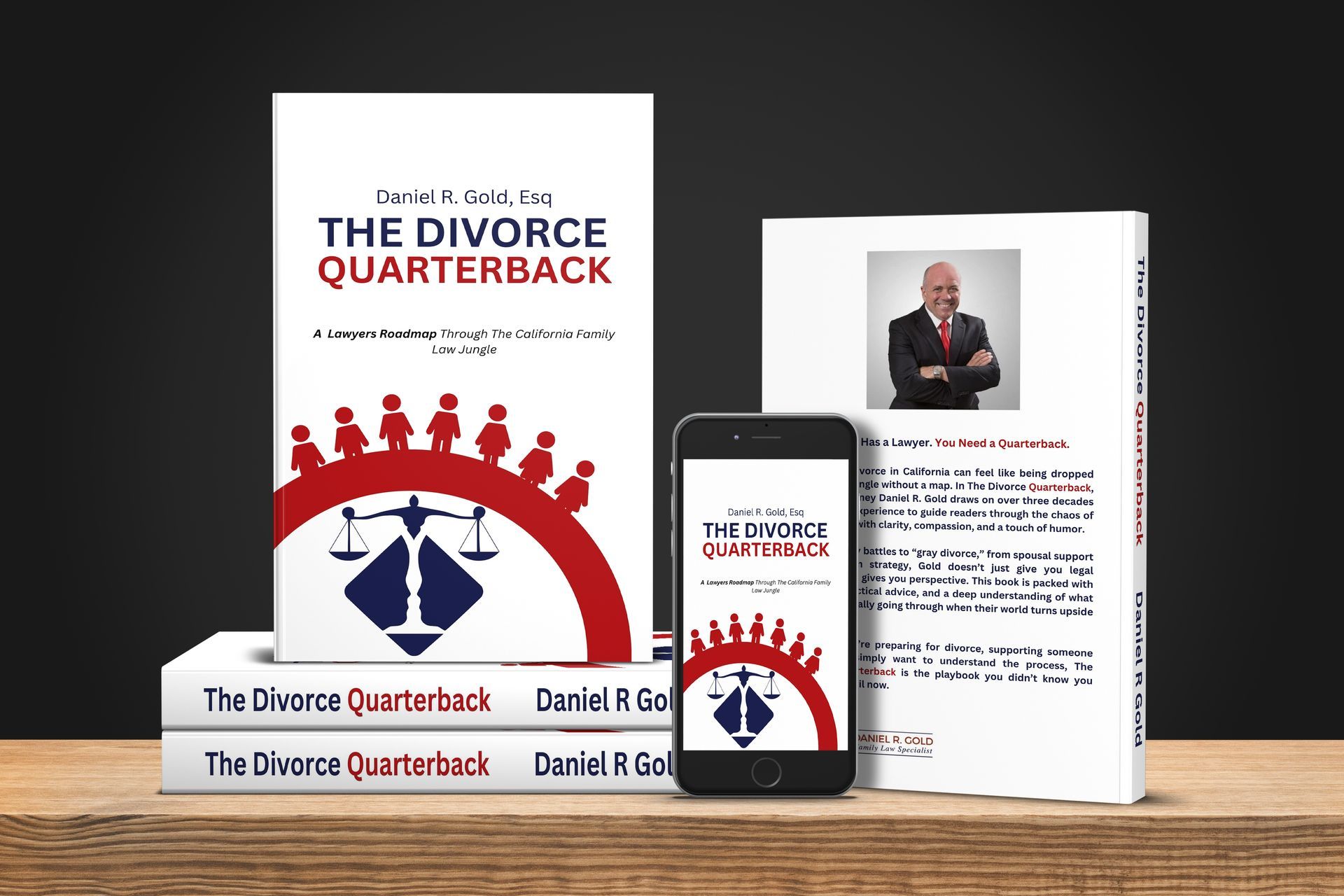
Daniel R. Gold, Certified Family Law Specialist, is proud to announce the release of his debut book, The Divorce Quarterback: A Lawyer’s Roadmap Through the California Family Law Jungle .

Accurate and complete disclosure helps protect your rights and facilitates equitable resolutions for property division, spousal support, and child support.

Divorce brings significant changes to your financial situation, and understanding the tax implications is crucial to avoid unexpected liabilities and maximize your financial health. From filing status to the division of assets, knowing how divorce impacts your taxes can help you plan effectively for your post-divorce life.

Do you believe there is parental alienation going on in your custody case? Learn how to recognize the signs and protect your relationship with your child. Read our latest blog for insights.

Navigating a high-conflict divorce? Discover strategies to manage disputes, protect your interests, and prioritize your children’s well-being. Read our latest blog for expert tips.

Considering an annulment? Learn about the legal criteria in California and whether it’s the right path for you. Discover the key grounds for annulment in our latest blog.

Going through a divorce? Property division in California can be complex, but understanding the basics can help. Learn about community vs. separate property and more in our latest blog.

Facing an international child custody dispute? Learn how to navigate the complexities and protect your child's best interests. Read our latest blog for essential insights

Grandparents can seek custody or visitation in California, but the process is not straightforward. Courts prioritize the child’s best interests while balancing parental rights, so proving that grandparents’ involvement is necessary requires careful legal navigation. For personalized advice and assistance with grandparents’ rights, contact me for expert guidance.