
Can I get an Annulment?
Daniel Gold • November 13, 2024

This question comes up in my practice every once in and while; particularly when someone comes in to consult on ending a relatively short marriage. While it is not common, I think it is important to lay out what an annulment is to address some misconceptions that have arisen.
What is an Annulment?
An annulment is a legal decree that a marriage is
null and void, as if it never legally existed.
Unlike a divorce, which ends a valid marriage, an annulment asserts that the marriage was never legally valid to begin with an
.
A judgement of
“nullity”,
however,
is only available under specific circumstances and is often harder to obtain than a divorce.
Understanding these
circumstances
can help individuals determine whether an annulment is the right path
or whether a person is better suited for a
“traditional”
divorce
.
A “Throwback” to pre-No Fault DIvorce?
I have come to the conclusion that peoples’ fascination with annulments is because it permits someone to think they can have a “do over” and avoid consequences for choices they make in marrying someone who was not a good fit; e.g.“I found out he/she was not the person they professed to be” . How many times have I heard that?? Too many to count. That does not stop people from looking for the “other person” to blame.
Be mindful that there are several specific
grounds for annulment. Each has specific
requirements and conditions that must be proven to the court
by a preponderance of the evidence
:
- Fraud:
If one spouse deceived the other about something essential to the marriage, this could qualify as fraud. Common examples include misrepresenting the desire to have children, concealing significant financial issues, or hiding a prior marriage.
This the grounds that people most seek to base their annulment claim on and the one that is probably, in my opinion, the hardest to prove.
Fraud must go to the heart of the marriage;
otherwise, it may not qualify as grounds for annulment.
- Bigamy:
A marriage is not legally valid if one spouse was already married to someone else when the union took place. Bigamy is illegal, and the court will grant an annulment if evidence of a prior marriage is provided.
- Underage Marriage: California law requires individuals to be at least 18 years old to marry without parental consent. If a marriage took place when one or both parties were underage and did not have parental consent, it may be eligible for annulment.
- Incest:
Marriages between close blood relatives
(such
as siblings or parent-child) are prohibited by law. If a couple is closely related, the marriage is automatically void and qualifies for annulment.
- Mental Incapacity:
If one or both spouses were mentally incapacitated or impaired
(for
example, under the influence of drugs or alcohol) at the time of the marriage, they may not have had the capacity to consent to the union. Mental incapacity can serve as grounds for annulment.
- Force:
If one spouse was coerced or forced into the marriage under threat or duress, the marriage is not considered consensual. This can provide grounds for annulment.
- Physical Incapacity: If one spouse is physically incapable of consummating the marriage (for instance, due to an undisclosed medical condition) and this incapacity is incurable, the marriage may be annulled. The incapacity must be present at the time of the marriage and must impact the marriage’s validity.
How do I file for an annulment?
- File a Petition: The annulment process begins by filing a Petition for Annulment with the family law court. This document outlines the grounds for annulment and requests a court hearing.
- Serve the Other Party: Once the petition is filed, the other spouse must be formally served with a copy of the petition. They have the right to respond and contest the annulment if they choose.
Here are the steps:
- Attend a Court Hearing: During the court hearing, both parties can present your evidence and arguments. The judge will review the case and determine whether the grounds for annulment are valid.
- Receive the Annulment Order: If the court grants the annulment, a formal order will be issued, legally nullifying the marriage. The annulment retroactively erases the marriage, as if it never existed.
Limitations and Timeframes
Unlike divorce, annulments have specific time limitations for certain grounds:
- Fraud : Must be filed within four years of discovering the fraud.
- Force : Must be filed within four years of the marriage.
- Underage Marriage : Must be filed by the underage spouse within four years of reaching legal age.
Other grounds, such as bigamy or incest, may not have time limitations.
Conclusion
Understanding the legal criteria for annulment is essential for those seeking to void their marriage under California law.
While a
n annulment
may provide
a
“do
over” ,
it
requires meeting specific grounds and providing evidence to support the case
.
A traditional
“divorce”
may be a more straightforward option even if you think you may have the required grounds.
If you are considering an annulment and need guidance, contact
seasoned family law counsel
.
Call: 949-756-0684
Email: dgold@tldlaw.com
Disclaimer
This information outlines a few of the concepts that surround annulments in the State of California. It is not intended to be, nor should it be construed as legal advice for any particular situation. Please seek advice from TLD Law or your personal attorney in your state or jurisdiction.

TLD Law Family Law Partner Daniel R. Gold was recently featured on the Divorce Mortgage Strategies Podcast , powered by the Divorce Lending Association . In the episode, titled “ The Divorce Quarterback: Leading the Team That Guides Clients Through Divorce ,” Dan joins host Amy Valdivia, CDLP®, to discuss the importance of coordination and strategy in complex divorce matters. The conversation explores how successful outcomes often require collaboration among family law attorneys, mortgage professionals, and financial experts—particularly in cases involving substantial assets, real property, retirement accounts, and long-term support considerations. Dan shares insight from decades of experience guiding clients through high-net-worth and gray divorces. He explains why approaching divorce as a team effort—where the attorney serves as a strategic leader coordinating financial, lending, and legal professionals—can help clients make informed, sustainable decisions during one of life’s most significant transitions. Watch the full interview on YouTube: https://www.youtube.com/watch?v=Mx7ruqT_IiU About Daniel R. Gold Daniel R. Gold is a partner at TLD Law and a California State Bar–certified Family Law Specialist. His practice focuses on complex divorce and family law matters, including high-net-worth divorces, division of business interests and real property, retirement asset division, and long-term support issues. Known for his strategic and detail-oriented approach, Dan works closely with clients to provide clarity and steady guidance through financially and emotionally complex situations. Learn more about Daniel R. Gold: https://tldlaw.com/our-people/daniel-gold/ About the Divorce Mortgage Strategies Podcast and the Divorce Lending Association The Divorce Mortgage Strategies Podcast is produced by the Divorce Lending Association and is designed for family law professionals, financial specialists, and individuals navigating divorce. The podcast focuses on promoting divorce literacy, financial clarity, and cross-professional collaboration to support better outcomes in divorce cases. Learn more about the podcast: https://www.divorcelendingassociation.com/reports/divorce-literacy-podcast.cfm Visit the Divorce Lending Association: https://www.divorcelendingassociation.com/
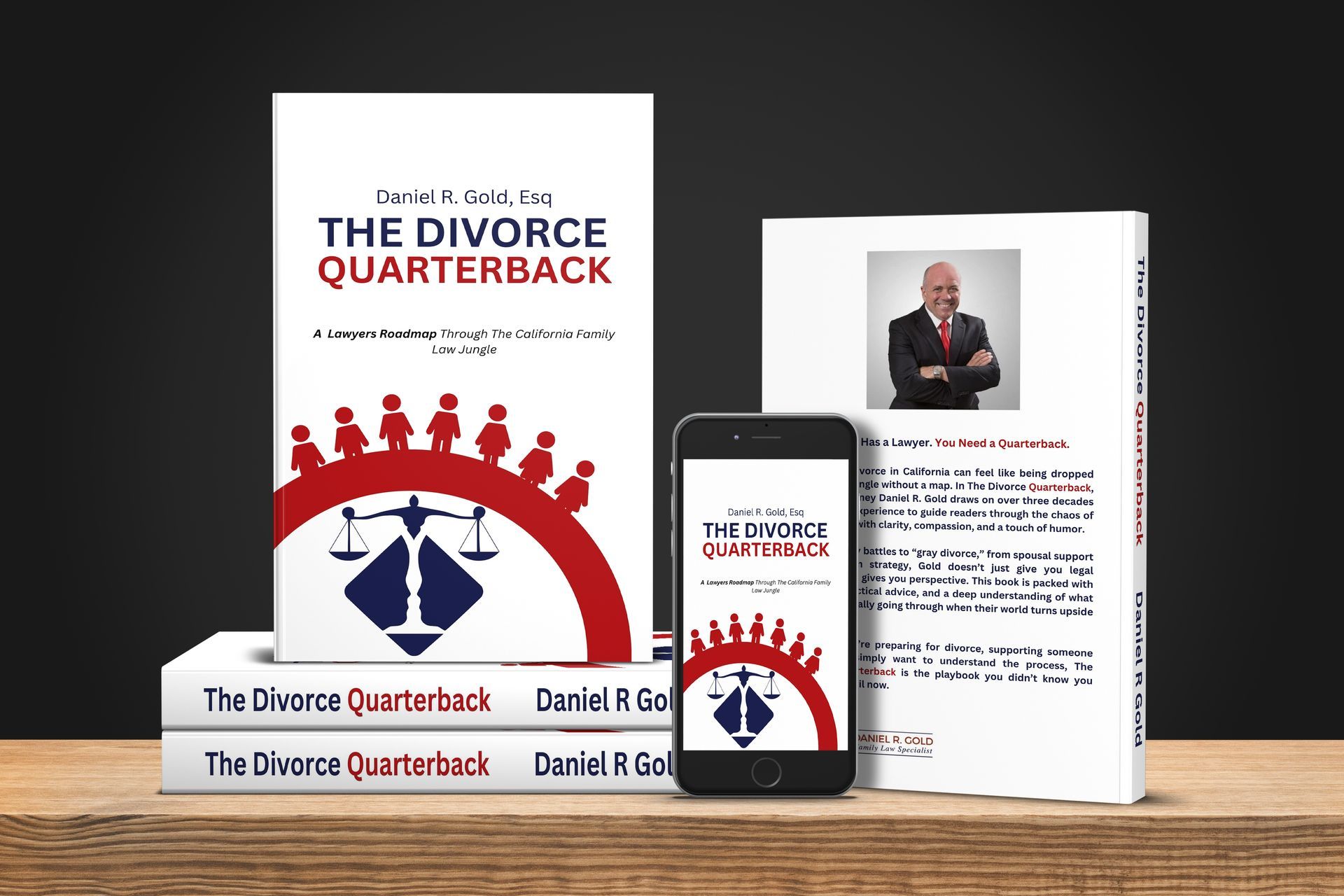
Daniel R. Gold, Certified Family Law Specialist, is proud to announce the release of his debut book, The Divorce Quarterback: A Lawyer’s Roadmap Through the California Family Law Jungle .

Accurate and complete disclosure helps protect your rights and facilitates equitable resolutions for property division, spousal support, and child support.
Divorce brings significant changes to your financial situation, and understanding the tax implications is crucial to avoid unexpected liabilities and maximize your financial health. From filing status to the division of assets, knowing how divorce impacts your taxes can help you plan effectively for your post-divorce life.
Do you believe there is parental alienation going on in your custody case? Learn how to recognize the signs and protect your relationship with your child. Read our latest blog for insights.

Navigating a high-conflict divorce? Discover strategies to manage disputes, protect your interests, and prioritize your children’s well-being. Read our latest blog for expert tips.

Going through a divorce? Property division in California can be complex, but understanding the basics can help. Learn about community vs. separate property and more in our latest blog.

Facing an international child custody dispute? Learn how to navigate the complexities and protect your child's best interests. Read our latest blog for essential insights

Grandparents can seek custody or visitation in California, but the process is not straightforward. Courts prioritize the child’s best interests while balancing parental rights, so proving that grandparents’ involvement is necessary requires careful legal navigation. For personalized advice and assistance with grandparents’ rights, contact me for expert guidance.

Unmarried and seeking custody rights? Understand your legal options and how to secure the best outcome for your child. Read our latest blog for valuable insights.